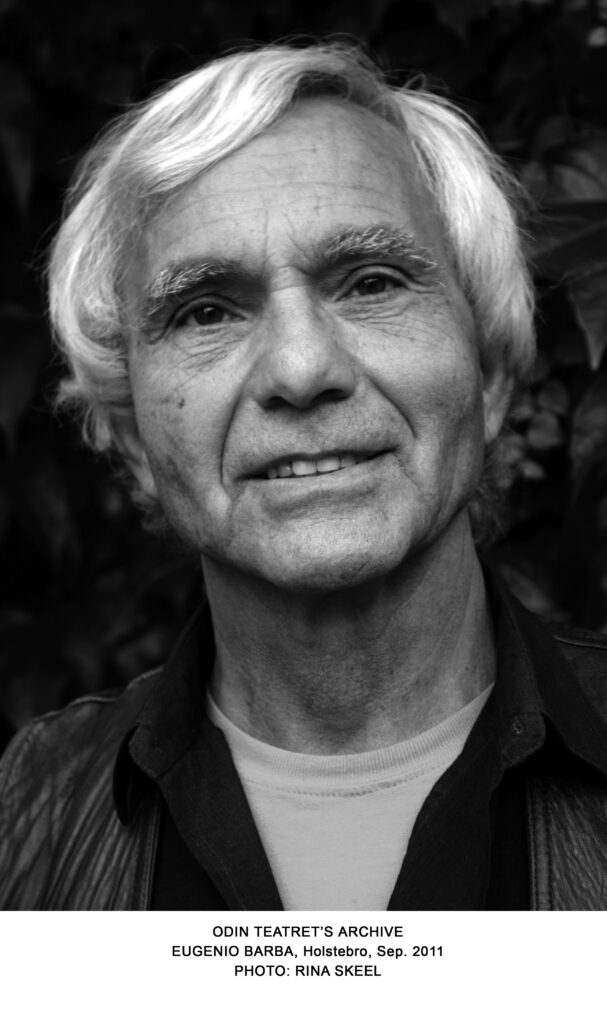
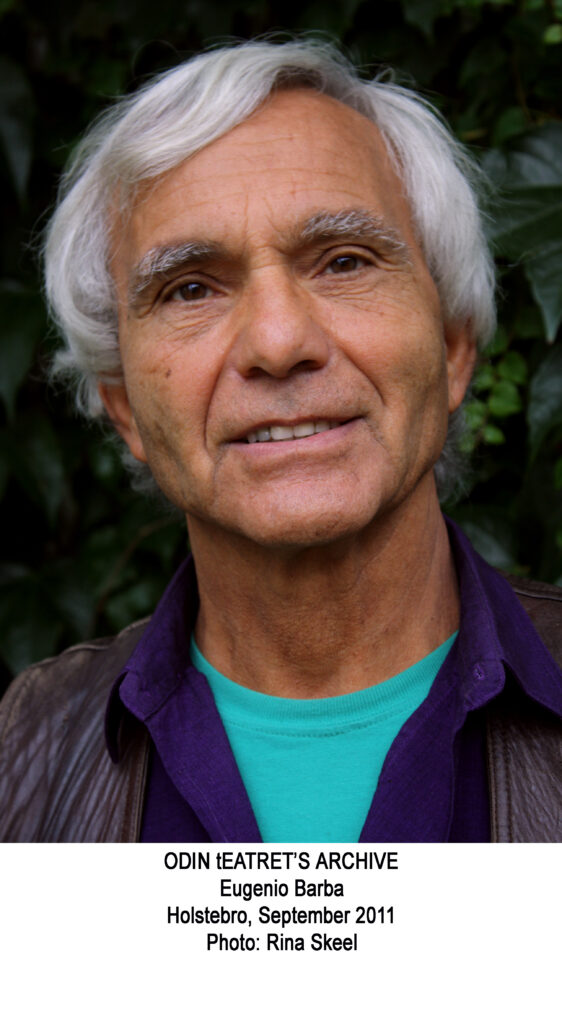
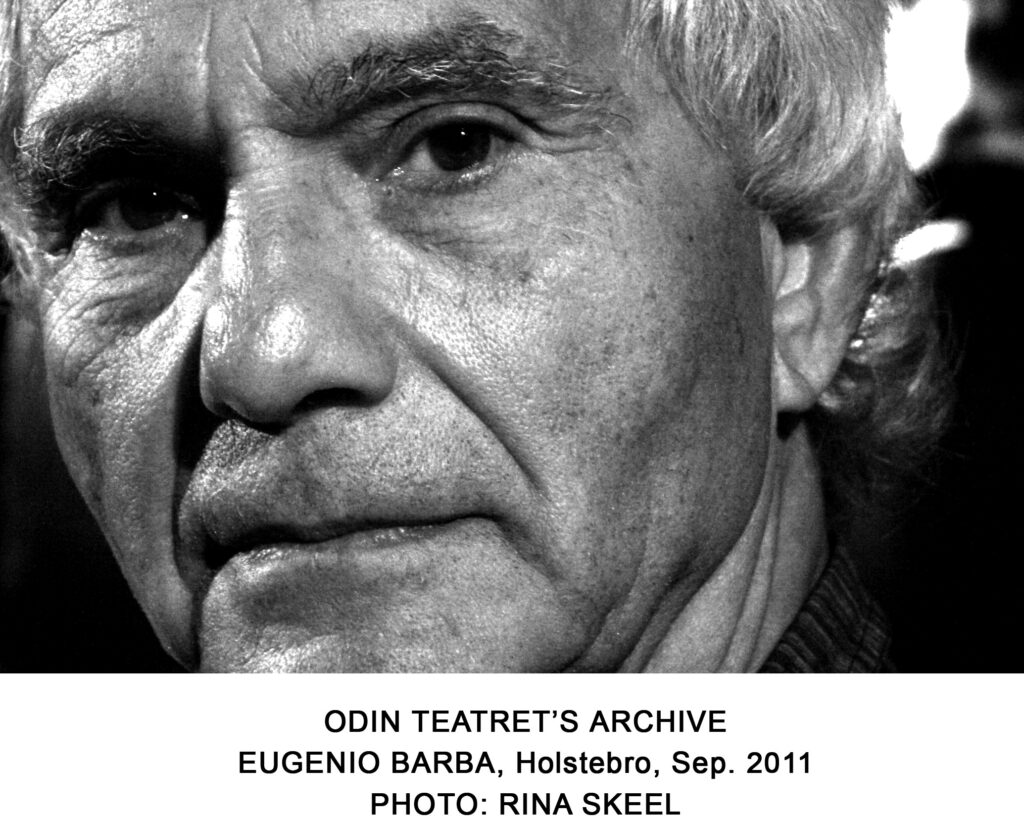
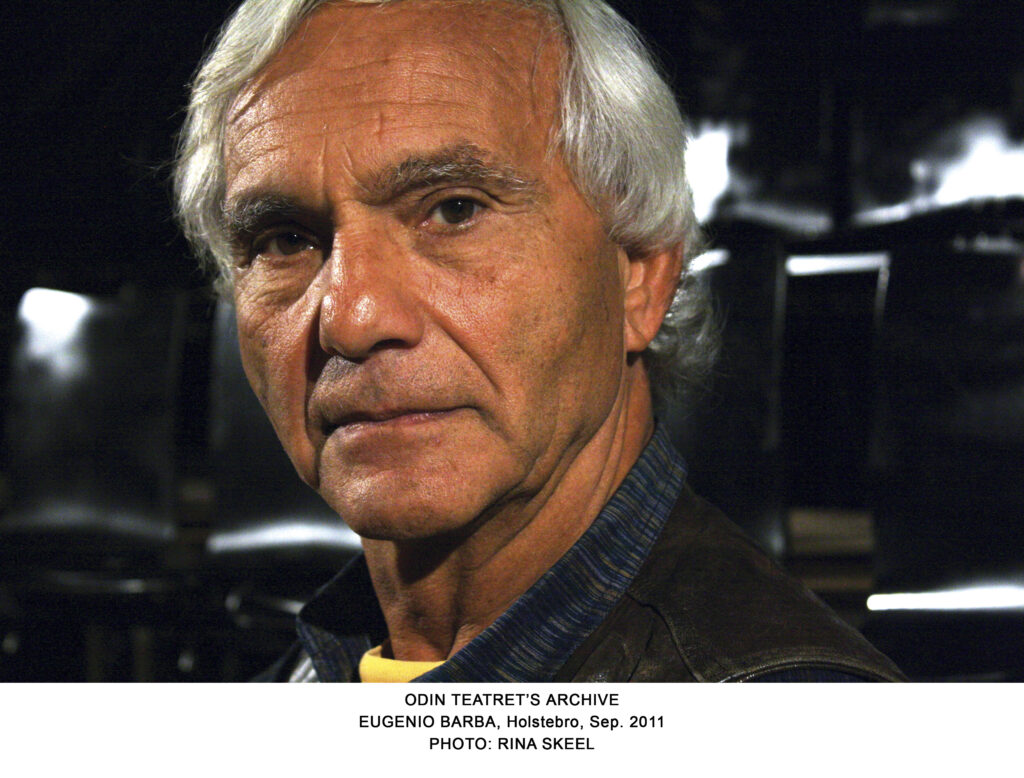
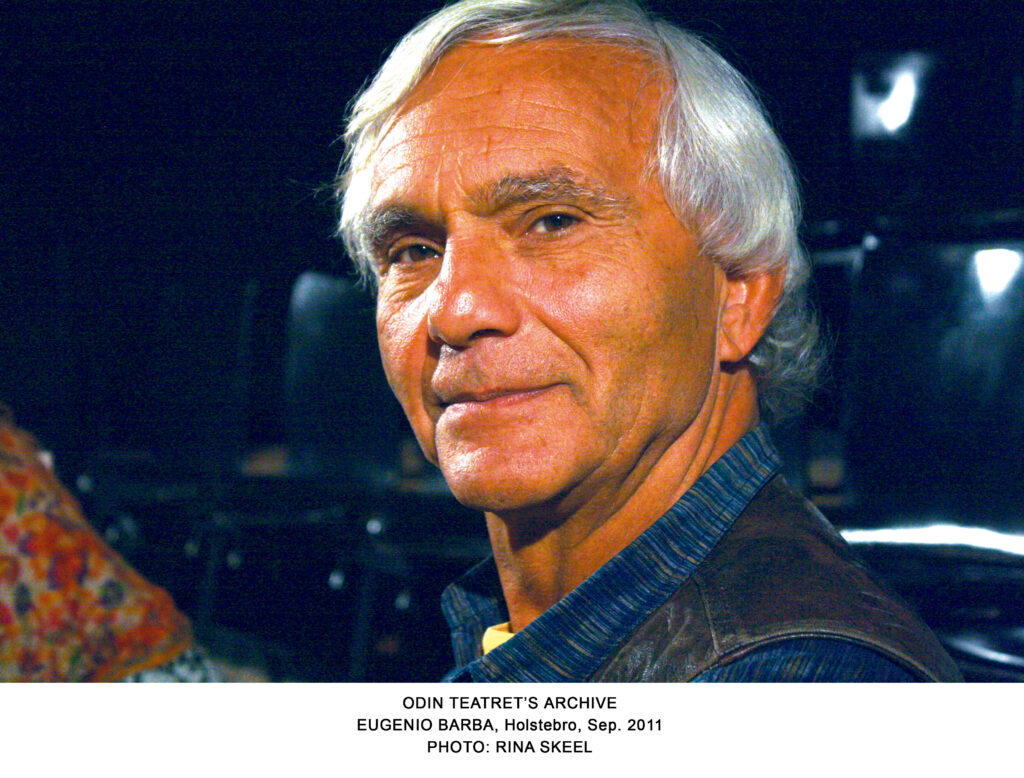
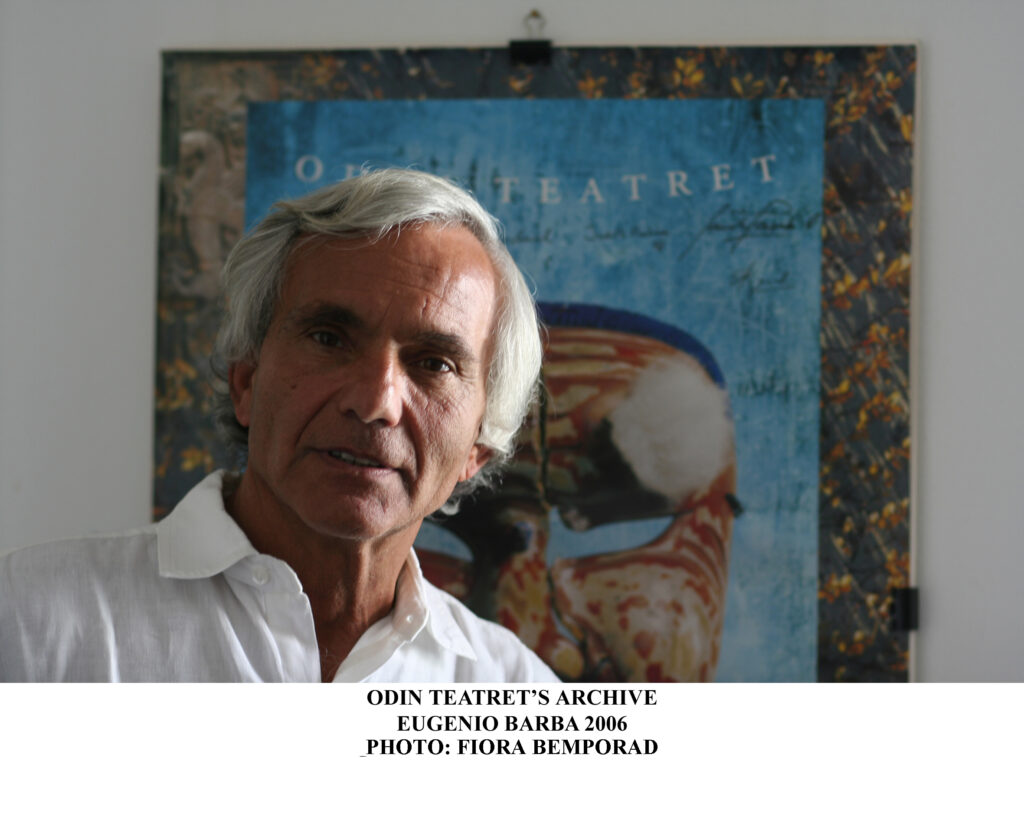
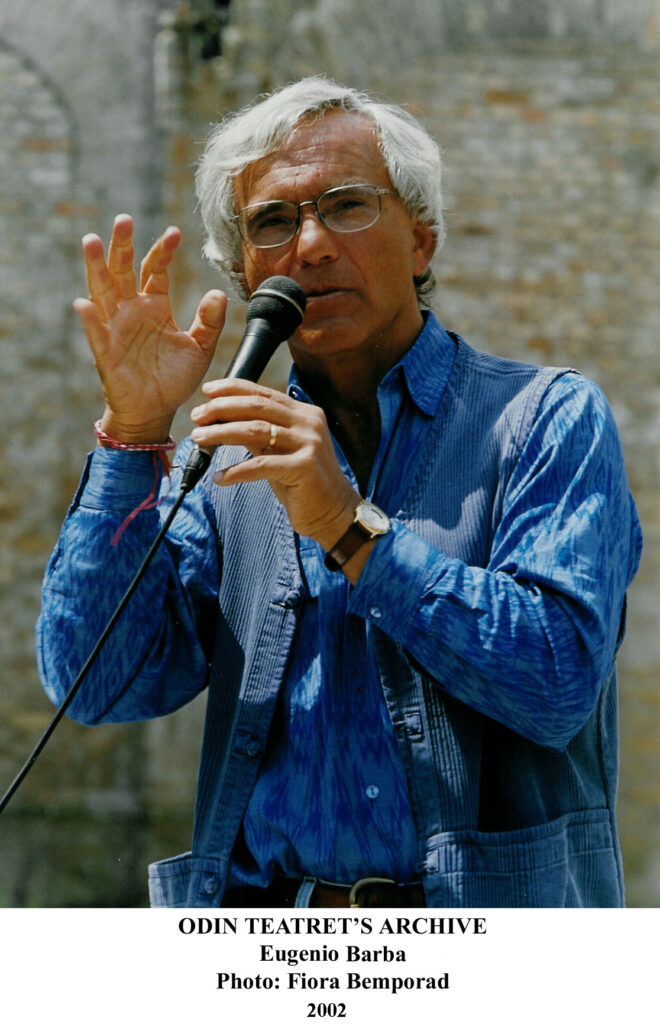
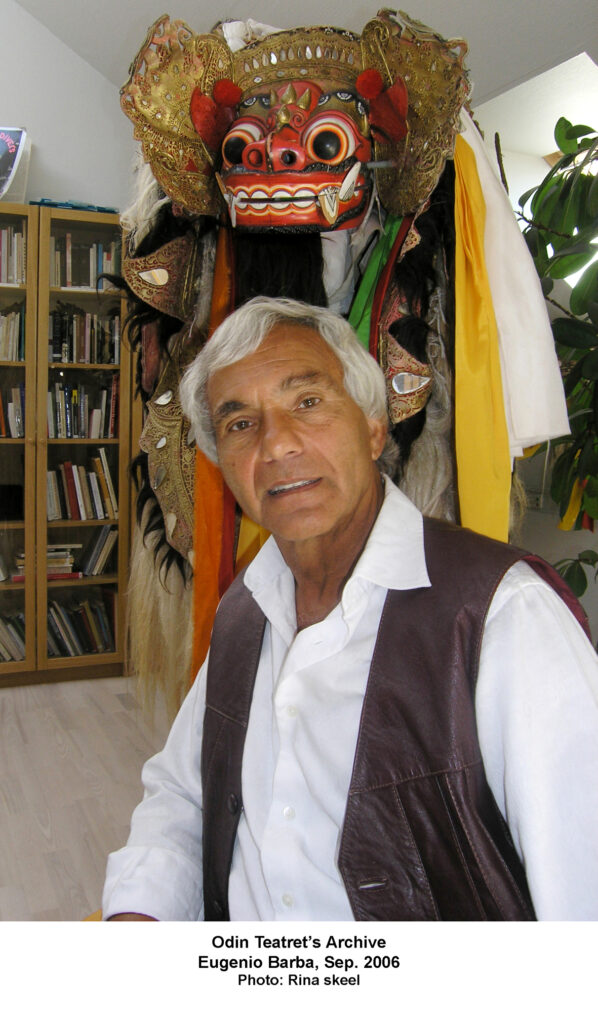
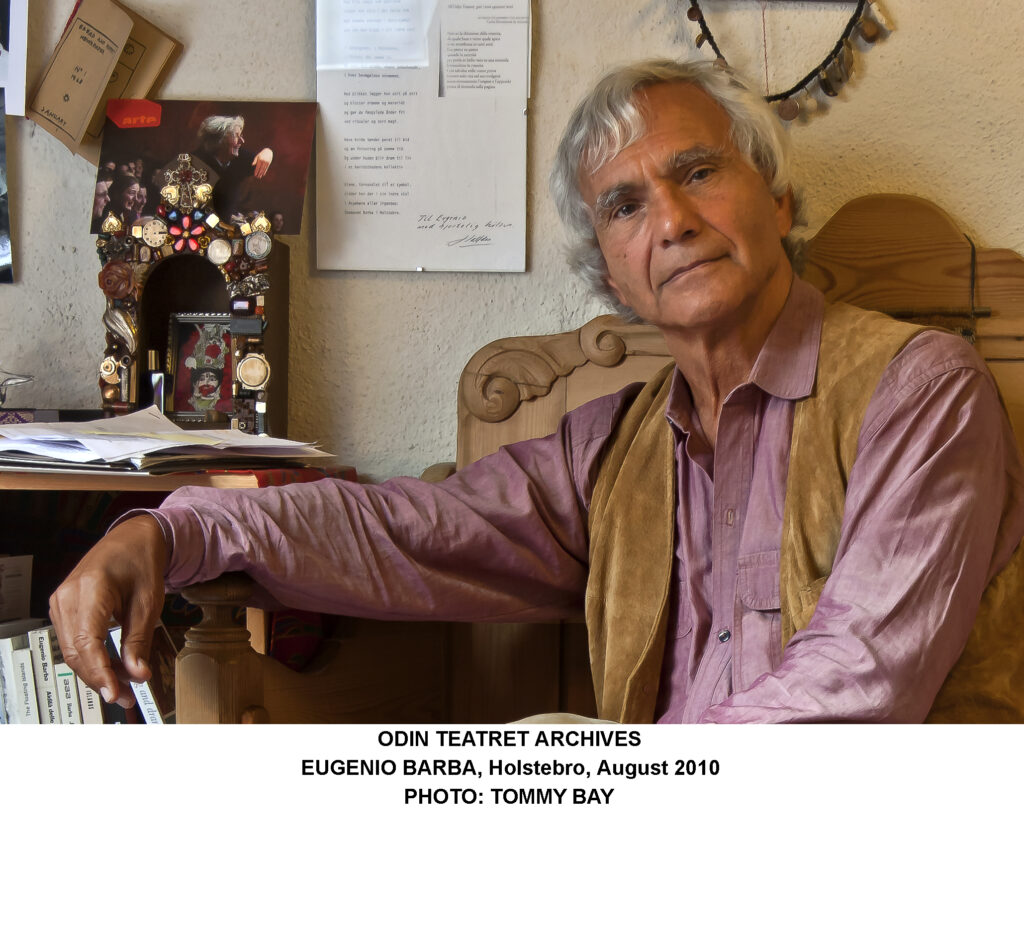
Eugenio Barba (Brindisi, 1936) grew up in Gallipoli, where his family’s socioeconomic situation changed dramatically after World War 2 with the death of his father, a fascist officer. He attended classical high school at the Nunziatella military college in Naples, but gave up the idea of a military career, following in his father’s footsteps. In 1954, when he was 18, he emigrated to Norway, where he worked for four years i as a welder in a mechanical workshop in Oslo and for two years as a sailor on a Norwegian freighter. He attended evening classes at the University of Oslo, graduating in French and Norwegian literature and the history of religions. In 1960, he lived for six months in a kibbutz in Israel.
In 1961, he received a scholarship from UNESCO and enrolled in the Warsaw Theatre School. He left after a year to join a young director his own age, Jerzy Grotowski, who in the town of Opole was questioning the legacy of Western theatrical tradition. For three years, Barba participated in the evolution of the 13 Row Theatre, which was in trouble with the communist authorities. He disseminated its original and subversive practice by publishing articles and essays in France, Italy, Scandinavia and the USA. In 1965, his book on Grotowski, In Search of Lost Theatre: A Proposal of the Polish Avant-Garde, was published in Italy and Hungary.
In 1963, he spent five months in India studying kathakali. Barba wrote an essay on this form of theatre, unknown in the West, which was immediately published in Italy, France, the USA, and Denmark.
Expelled from Poland by the communist authorities, Barba returned to Oslo where, in October 1964, he founded Odin Teatret with four young people who had been rejected from the National Theatre School. He began as an amateur theatre, developing a rigorous acting apprenticeship – training – based on physical and vocal exercises. This practice would become a point of reference after 1968, when the new culture of theatre groups emerged internationally.
In 1966, he received an invitation from a Danish town in Jutland, Holstebro, which aspired to have a theatre despite being unable to support it. There was no theatre building in Holstebro; Barba accepted a farm a kilometre and a half from the town as a venue and transformed the stable into a black room without a stage or stalls, a space that brought actors and spectators together. It was the first “black box,” and Barba named Odin Teatret an “inter-Scandinavian theatre laboratory” whose Swedish, Norwegian, Finnish and Danish actors did not share a common language with their spectators. Despite this handicap, Odin Teatret’s performances became well-received and toured Europe, achieving international recognition in 1969 with the performance Ferai at the Théâtre des Nations in Paris, the Venice Biennale and the BITEF Festival in Belgrade.
Over more than sixty years of activity, Eugenio Barba and his laboratory Odin Teatret have become a legend of contemporary theatre. They created their own way of sharing their experiences through intense theoretical and practical seminars; they produced films on the actor/dancer’s apprenticeship in various traditions; they published a quarterly magazine, “Teatrets Teori og Teknikk,” and books, including Grotowski’s Towards a Poor Theatre“, edited by Barba. They promoted sociological audience research in collaboration with Swedish, Danish, and Italian universities.
Since his arrival in Holstebro in 1966, Barba dedicated its citizens to discover the marvels of theatre, transforming the tiny provincial town into a hotbed of inspiration and exceptional encounters, welcoming artists such as Grotowski, the Living Theatre, Ellen Stewart La Mama and Joe Chaikin with his Open Theatre, as well as outsiders like Etienne Decroux and Jacques Lecoq. He coordinated the first foreign tour of Dario Fo and Franca Rame with the performance La signora è da buttare (The Lady Is to Be Thrown Away); he invited Luca Ronconi’s Orlando Furioso, fresh from its success in Spoleto Festival, and hosted Jean-Louis Barrault and his wife Madeleine Renaud when they were evicted from their Odéon Theatre in Paris. In the early 1970s, a series of performances and workshops featuring Javanese, Balinese, Japanese and Indian theatre/dance companies attracted actors, directors, and scholars from around the world to Holstebro, an inspiration that a decade later would transform into intercultural theatre.
In 1974, Barba left his refuge in Holstebro and moved Odin Teatret to Carpignano, a village in Salento about twenty kilometres from his Gallipoli. For five months, he and his actors worked outdoors and experimented with the “barter”, a mutual introduction ceremony between the theatre group and the local population. Barter is structured as an exchange of experiences and traditions where cultural and professional identity is materially expressed through songs, dances, stories, food preparation, or simulacra of ceremonies that have long since disappeared. This is the case of the “festa de lu mieru” in Carpignano, which fell into disuse and was “revived” during a barter. Invigorated by young people from Carpignano in the following years, it sparked the revival of folk traditions — food, music, dance and song — in other villages of Salento, culminating in the Festa de la Taranta in Melpignano.
Using theatre as barter, a means of interaction between separate and diverse social groups in areas of “culture without theatre”, Barba and Odin Teatret outlined its possibilities at the 1975 Venice Biennale. In the years that followed, barter found a series of applications involving the multiple subcultures of Holstebro — barracks, hospitals, shops, churches, schools, and sports clubs. It is the Festuge, the Festive Week, that subverts the entire town for nine days and nights as the different professions, activities, religions, generations, and ethnicities of Holstebro perform, collaborating to showcase their work culture and their “diversity”. The Danish Ministry of Culture distributed grants to other regional theatres to inspire them to embrace this potential of the theatre craft. The European Union funded two five-year projects involving fifteen nations, which met and engaged in dialogue through barters.
In 1976, Barba dedicated himself to establishing a network of encounters and collaborative ties between theatre groups ignored by official culture. The “Third Theatre” became a true level of contemporary theatre, developed outside of institutional systems. It was his long stay in Latin America and Asia — in contact with anonymous theatre companies and groups operating in locations far from major cities and familiar audiences — that allowed Barba to identify a performing culture whose production system recalled the conditions of Odin Teatret: not a First Theatre guarantor of a glorious tradition, nor a Second Theatre oriented toward experimentation and research, but a Third Theatre characterized by social commitment and ethical tension. Barba organised and promoted the first group theatre meetings, starting in 1976 at the BITEF Festival in Belgrade, a tradition that continues today.
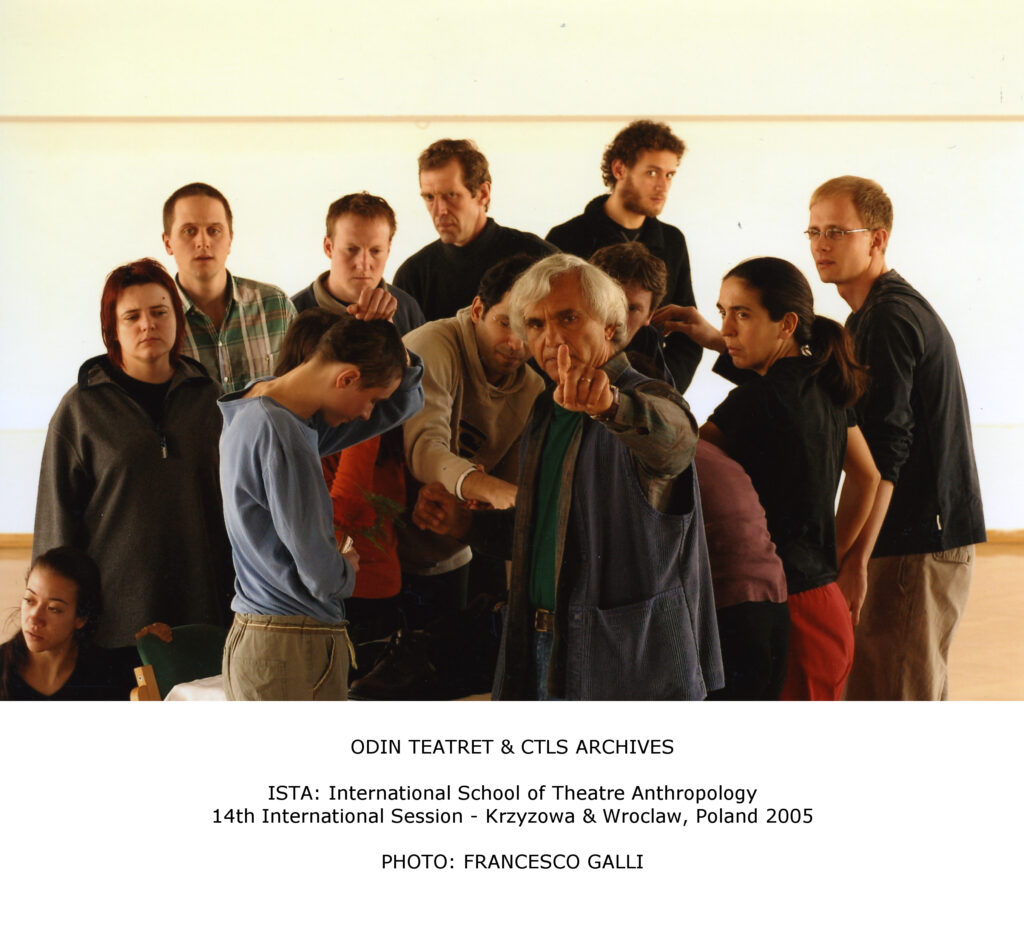
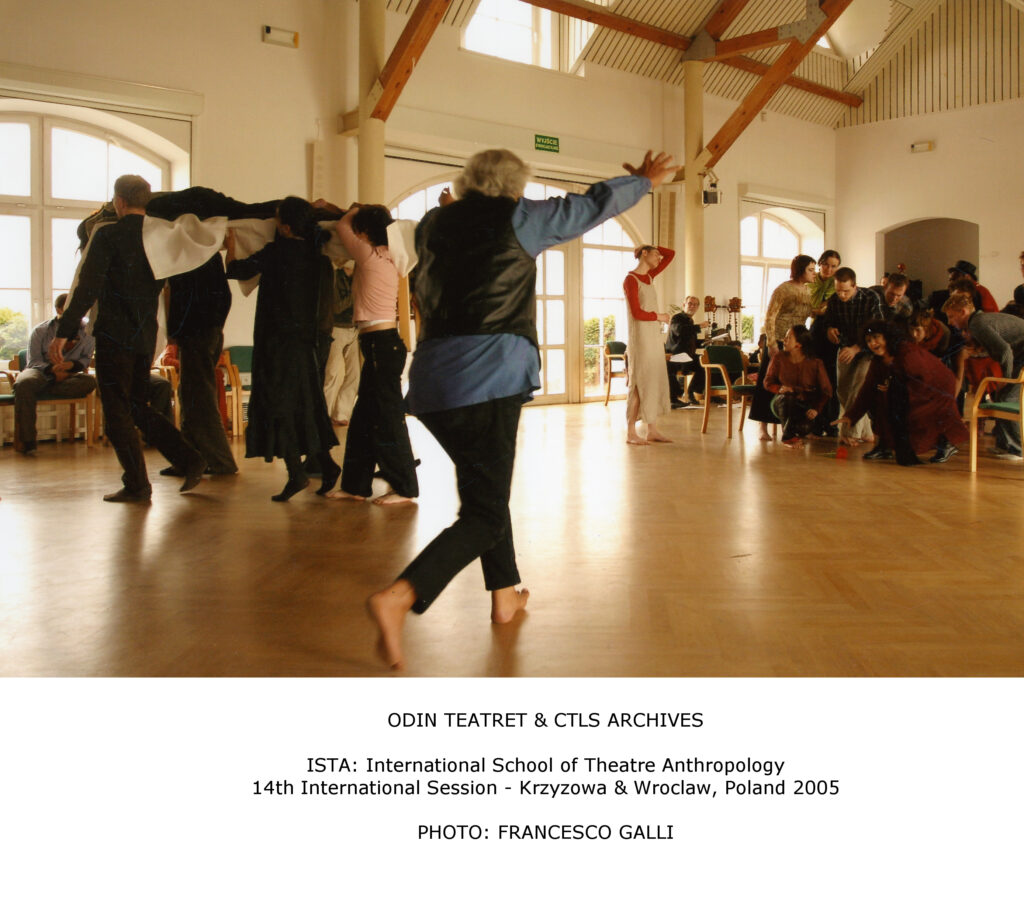
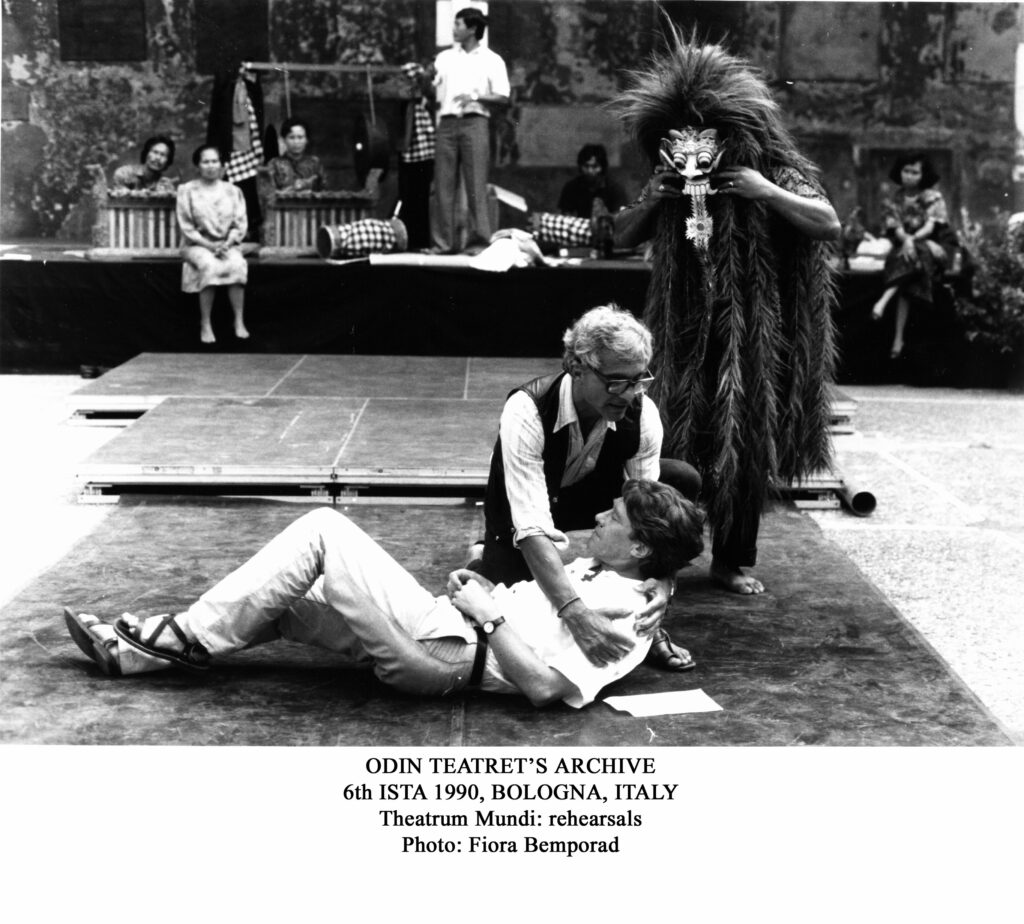
In 1980, he founded the International School of Theatre Anthropology (ISTA). Together with a group of Asian and Western masters, dancers and actors, scholars, and anthropologists, Barba – during the 17 ISTA sessions up until the 2023 session at the Theatre Olympiad in Budapest – conducted a continuous series of comparative practical studies, sometimes lasting two consecutive months. The results of this research led to the definition of the field of “Theatre Anthropology” and its central concept: “pre-expressivity,” or the principles of stage presence. The stage presence of the actor and the dancer takes different forms, but the principles that make this presence effective on the spectator’s nervous system and mind are the same.
In 2002, he inaugurated the Centre for Theatre Laboratory Studies in Holstebro in partnership with the University of Aarhus. Numerous international meetings, seminars, publications, and a Summer School formed the core of this collaboration between the theatre and the Academy.
At the heart of this impressive, autonomous cultural policy, giving it the meaning and value of a conquered difference, is the incandescence of the performances – 87 by 2026 -created by Barba with his faithful actors from Odin Teatret and the intercultural ensemble Theatrum Mundi. Presented in 72 countries, at countless festivals and in regions “without theatre”, their preparation can last more than two years, validating the possibility of another production system where actors, technicians and collaborators ensure the continuity and growth of a creative environment “specialised in not being specialised.” Therefore, capable not only of producing performances, but of interacting with social and professional strata far removed from the theatre.
Barba is on the editorial boards of international journals, including “TDR – The Drama Review,” “Performance Research,” “New Theatre Quarterly,” and “Teatro e Storia.” He has published 25 books and numerous essays translated into some thirty languages. His artistic research and research in the field of Theatre Anthropology has been recognized with honorary doctorates from the universities of Aarhus, Ayacucho, Bologna, Havana, Warsaw, Plymouth, Hong Kong, Buenos Aires, Tallinn, Cluj-Napoca, Edinburgh, Brno, Shanghai, the Peloponnese and Bucharest. He has been awarded the “Reconnaissance de Mérite Scientifique” from the University of Montreal and the Sonning Prize from the University of Copenhagen.
Barba has received numerous international awards, including the Mexican Critics’ Award, the Luigi Pirandello International Award, the Gloria Artis Gold Medal from Poland, the Atahualpa del Cioppo Award from the Festival Internacional Artes Escenicas of Montevideo, the Thalia Award from the International Association of Theatre Critics (IATC), and the Honorary Medal of the City of Athens. Denmark has awarded him the highest honours: the Danish Academy Prize in 1976, and the Queen’s Cross of Denmark in 2000. In 2013, the Danish Directors’ Association awarded him a Lifetime Achievement Award, and the Danish state awarded him a lifetime annuity for artistic merits to the nation.
In 2020, together with actress Julia Varley, Barba established the Barba Varley Foundation in Italy to support the “nameless,” people in and outside of theatre who operate in disadvantaged situations. He donated his library and artistic legacy to the Puglia Region, which, in return, promotes his project “Living Archive Floating Islands” (LAFLIS), installed at the Bernardini Library in Lecce. The Barba Varley Foundation’s scientific and artistic collaboration with the University of Roma Tre, culminating in the series of lectures given by Eugenio Barba and Julia Varley as visiting professors in 2022, has continued with the establishment of the METIS Winter School, held at the Teatro Potlach in Fara Sabina in a fully immersive setting. The first three sessions were dedicated to improvisation (March 2024), dramaturgy (March 2025), and artistic coherence and politicality (April 2026). Among the artists who have shaped the history of theatre in the second half of the twentieth century, Eugenio Barba is the only one to have worked innovatively in all fields of theatrical culture: artistic creation; theoretical reflection; the transmission of professional knowledge; work on historical memory; scientific research; and the use of theatre in diverse social contexts and as a transcultural tool for fostering relationships between different cultures and ethnicities.
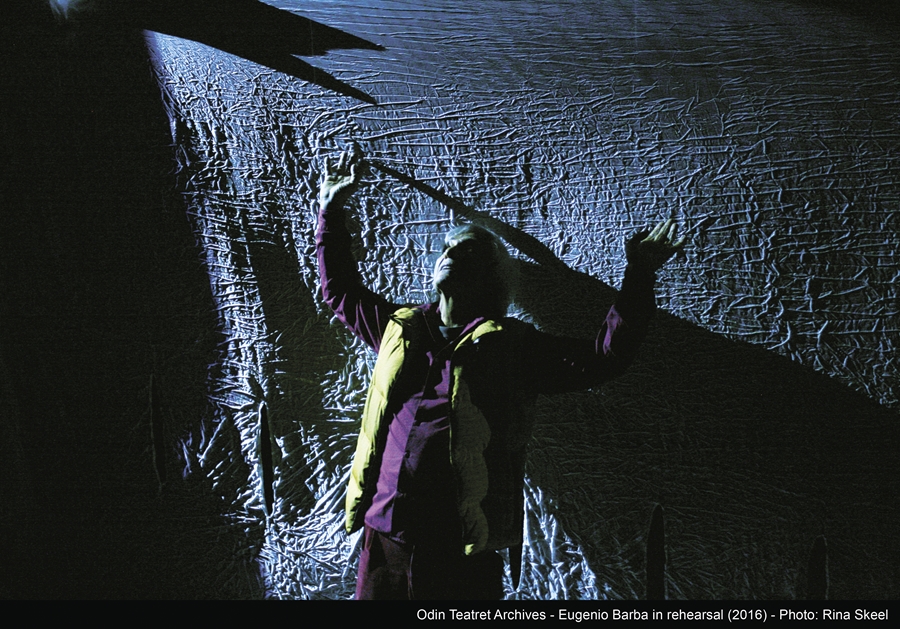
Eugenio Barba
CV & Bio 2026 – in English (pdf-format)
BIBLIOGRAPHY
A Systematic Bibliography of Eugenio Barba’s Writings by Lluis Masgrau. (2025)
(Several data and information of this bibliography come from an ongoing work by Lluís Masgrau on a systematic bibliography of Eugenio Barba’s writings)
Index of Concepts in Eugenio Barba’s Writings
Doctor Honoris Causa speeches
– a selection in English (pdf-format):
QUESTIONS FROM MY SECOND LIFE
2019, University of Peloponnese, Greece
THE LABORATORY INSTINCT
2017, Janáček Academy of Music and Performing Arts in Brno, Czech Republic
NEW WORDS FOR ANCIENT PATHS
2014, Queen Margaret University, Edinburgh, Great Britain
FAME AND HUNGER
2012, Babes-Bolyai University, Cluj-Napoca, Romania
IN PRAISE OF FIRE
2008, University of Buenos Aires, Argentina
ANGELANIMAL
2006, University of Hong Kong, Hong Kong
THE PARADOX OF THE SEA
2005, University of Plymouth, Great Britain
THE HOUSE OF THE ORIGINS AND THE RETURN
2003, University of Warsaw, Poland
IN THE GUTS OF THE MONSTER
2002, University of Havana, Cuba
SONNING PRIZE ACCEPTANCE SPEECH
2000, Copenhagen University – Sonning Prize, Denmark
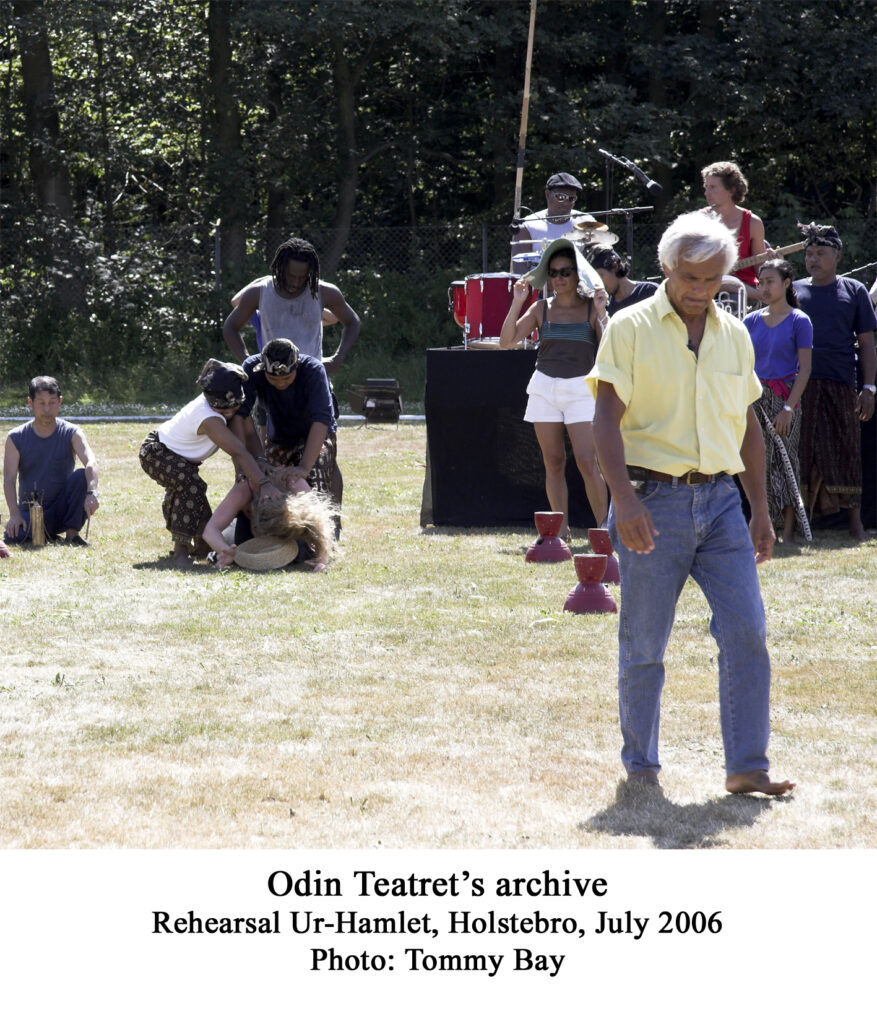
Eugenio Barba – Photo Gallery
These photos can be used for free only in connection with articles, press announcements or essays about Odin Teatret’s activities on tour and in Holstebro.
The mention of the photographer and the source is obligatory. The photographer’s name and other information can be found underneath each photograph.
For other uses, please contact Odin Teatret or the photographer for authorisation.